Mara Hayes · 6 September 2026
Urban Agriculture on Rooftops Supports Knitters' Shift to Local Natural Dyes Amid Worldwide Disruptions
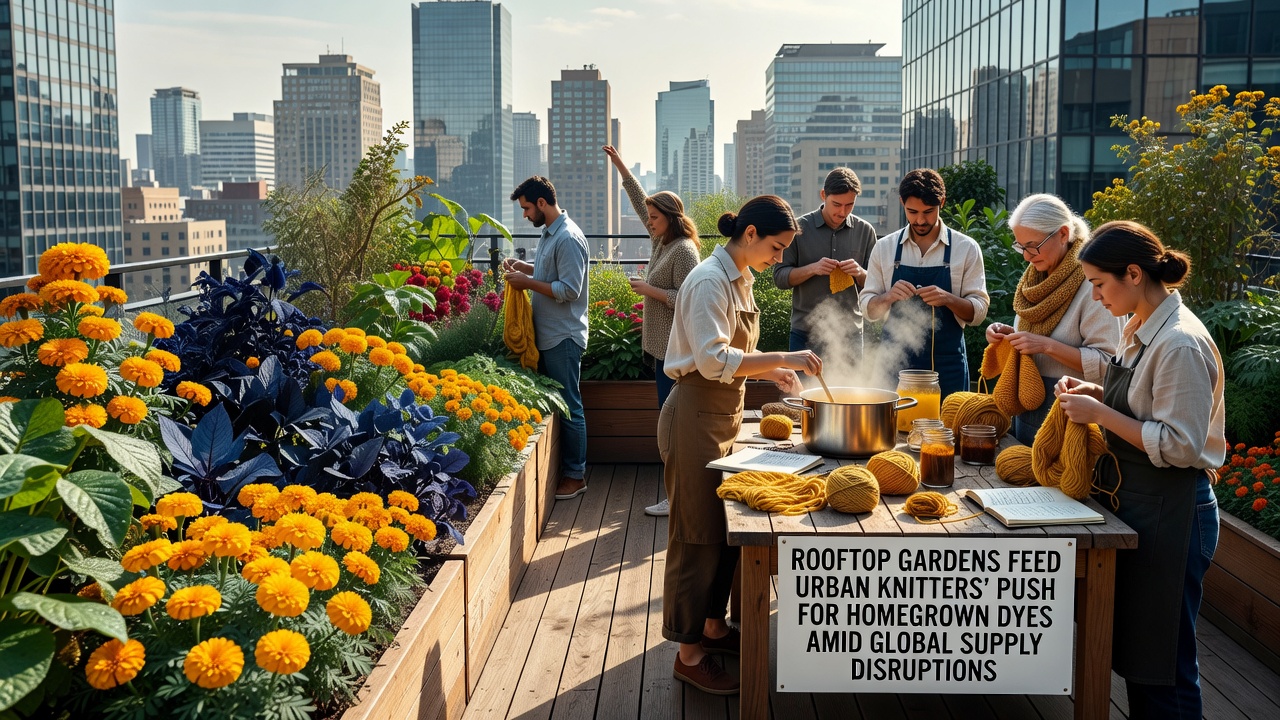
Knitters in major cities have increasingly turned to plants cultivated on rooftops for natural dyes, a development tied directly to repeated interruptions in global textile supply chains that began intensifying in 2024 and continued through 2026. These rooftop installations grow species such as indigo, madder, weld, and coreopsis, which provide pigments for yarn without reliance on imported synthetic colorants or overseas botanical extracts. Data from municipal agriculture programs in North America and Europe show rooftop dye gardens expanded by 28 percent between 2023 and 2025, according to reports compiled by city planning departments.
Supply disruptions stem from several documented factors, including shipping delays at major ports, weather-related crop failures in traditional dye-producing regions, and regulatory changes affecting chemical imports. The United Nations Conference on Trade and Development tracked a 19 percent rise in average lead times for textile inputs during 2025, figures that prompted many small-scale fiber artists to seek alternatives closer to home. In September 2026, several knitting collectives in Portland and Toronto reported completing full garment projects using only dyes harvested from buildings within city limits.
Plant Selection and Cultivation Methods
Gardeners select dye plants based on yield per square meter and compatibility with container growing systems common to rooftops. Indigofera tinctoria requires well-drained soil and consistent warmth, conditions that building-top microclimates often satisfy when irrigation systems are installed. Madder roots take two to three years to reach harvestable size, yet they store easily once dried and produce reliable reds when processed with specific mordants. Observers note that many urban plots combine these with faster-maturing options such as weld for yellows, allowing knitters to achieve a broader palette within a single growing season.
Soil composition receives careful attention because rooftop weight limits restrict the depth of growing media. Programs run by the Canadian Ministry of Agriculture have published guidelines recommending specific blends of compost, perlite, and biochar that maintain nutrient levels while keeping total load under structural thresholds. Those guidelines have been adopted by community groups in Vancouver and Montreal, where rooftop dye gardens now operate on more than forty buildings.
Processing Techniques and Color Outcomes
After harvest, plant material undergoes extraction methods that knitters can perform in standard apartment kitchens or shared studio spaces. Fermentation vats for indigo, solar dyeing jars for lighter shades, and simmering pots for madder all require modest equipment. Workshops organized by textile research centers at the University of Melbourne have documented consistent colorfastness results when fibers receive proper mordanting with alum or iron. These sessions, held quarterly, attract participants who then replicate the processes at home.
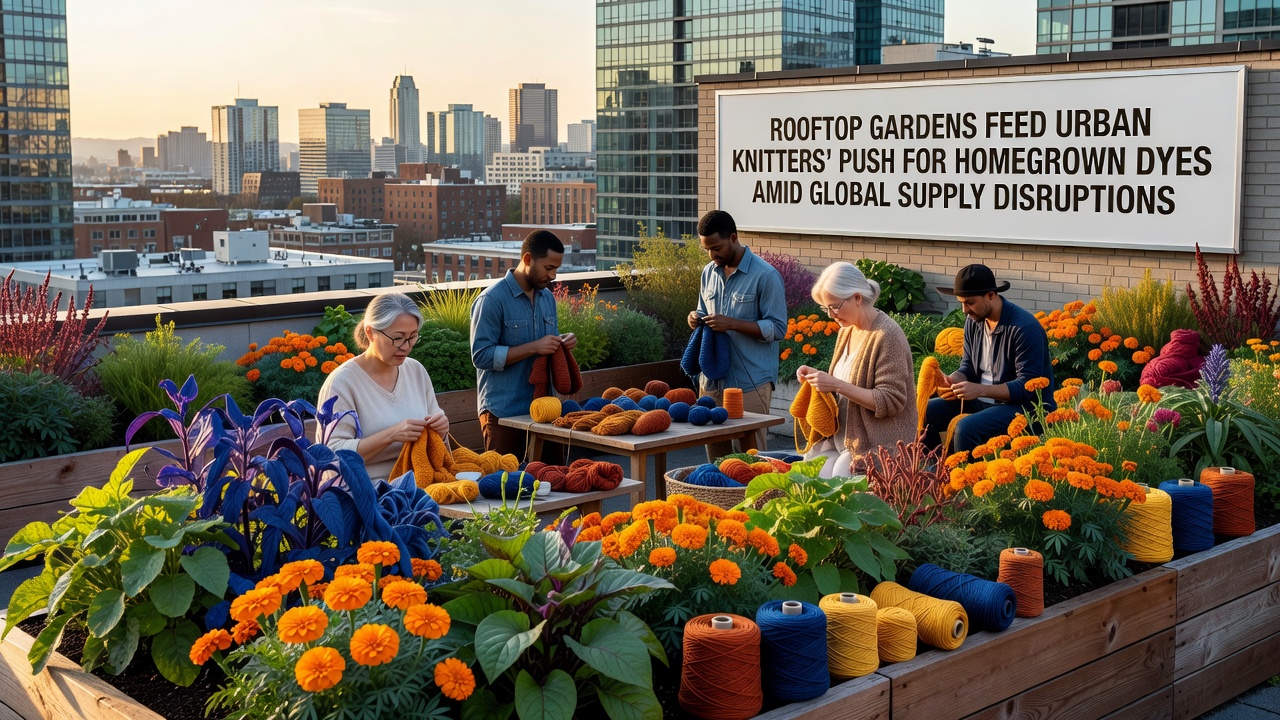
Color libraries maintained by fiber guilds in several cities record the range of shades obtainable from rooftop stock. One archive maintained by the Textile Society of Australia lists forty-two distinct hues derived solely from plants grown within ten kilometers of central Melbourne. The archive includes test swatches and processing notes, allowing new practitioners to replicate results without trial-and-error waste.
Community Networks and Knowledge Sharing
Knitting circles have formed around shared access to rooftop plots, with participants rotating maintenance duties and dividing harvests according to agreed schedules. These networks often operate through digital platforms that track planting calendars and dye-lot inventories. In New York, a coalition of building owners and craft organizations coordinates access to twelve rooftops, producing enough plant material to supply roughly 180 active dyers each season.
Training programs emphasize safety protocols around mordants and waste disposal, topics covered in materials distributed by the Australian Centre for Agriculture and Law. Participants learn to neutralize spent dye baths before disposal, reducing environmental impact while maintaining compliance with local wastewater regulations. Such practices have become standard in cities where rooftop dye gardens operate at scale.
Conclusion
Rooftop cultivation of dye plants has become a documented response among urban knitters to persistent global supply challenges. Continued monitoring by agricultural agencies and textile research institutions will determine how widely these methods spread and whether yields can meet growing demand from fiber communities. The patterns established through 2026 indicate steady adoption where building infrastructure and community coordination align.