Taylor Griffin · 15 November 2026
Knitted Heirlooms from the 1800s Map Out Ancestral Routes Across North America
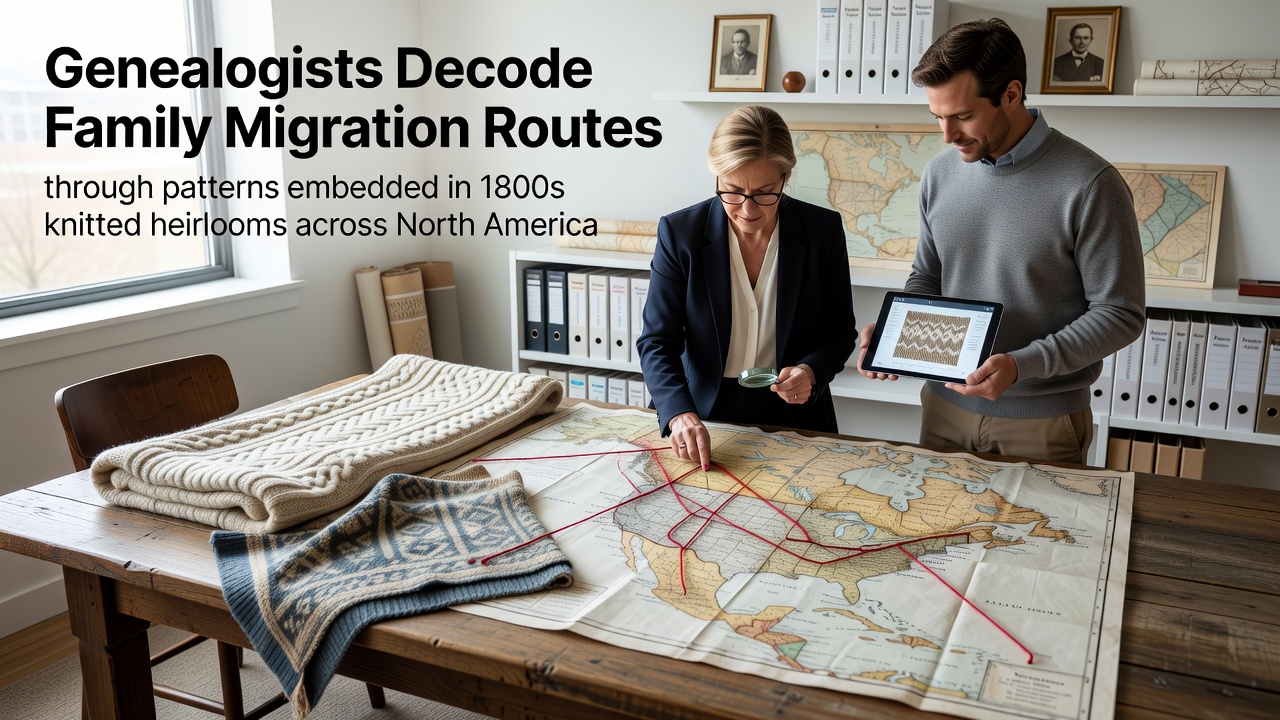
Genealogists have turned to preserved knit items from the nineteenth century as a source of data on family movements throughout North America, and researchers continue to extract details from stitch sequences, color placements, and regional motifs that align with documented migration corridors. These objects, passed down through generations, carry embedded indicators that correspond to points of origin in Europe and subsequent settlement paths on the continent.
Knitting traditions arrived with immigrant groups in the early 1800s, and communities adapted European techniques to available materials while incorporating symbols that marked family identity or village affiliation. Analysts compare these elements against census records, land deeds, and passenger lists to verify travel sequences that took families from Atlantic ports westward along trails and rail lines.
Pattern Elements as Migration Markers
Stitch combinations such as specific cable twists or lace insertions appear in collections from New England, the Midwest, and the Pacific Northwest, and each variation matches documented clusters of settlement. Color sequences using natural dyes from local plants further locate the approximate decade and geographic zone where an item was completed, because plant availability shifted as populations moved into new territories.
One research team at a major university examined over two hundred surviving pieces and cross-referenced the findings with ship manifests from the 1840s and 1850s. The study revealed that certain diamond motifs common in Scottish knitting reappeared in items made by families who had relocated to Ontario and later to the Dakotas, confirming routes that followed the Great Lakes and then the northern plains.
Case Examples from Family Collections
Descendants in Montana have preserved a set of stockings whose heel construction follows a style traced to Ulster, Ireland, and the same construction appears in items held by families in Saskatchewan, indicating parallel movements along the 49th parallel. Archivists at regional museums have cataloged these parallels and added them to public databases that allow genealogists to query by motif rather than by surname alone.
Another collection from a Pennsylvania archive contains mittens whose thumb gussets incorporate a star pattern associated with German Palatine settlers. Those same mittens show yarn plied from wool sourced in the Ohio River valley, suggesting the family continued westward after initial settlement in the 1830s. Such layered evidence supplies timelines that fill gaps in paper records damaged by fires or floods.
November 2026 Conference and Database Expansion
In November 2026, a multi-institution project will release an expanded digital atlas that overlays knit-pattern data onto known migration maps. The atlas draws from holdings at the Library and Archives Canada and the U.S. National Archives, and it includes searchable entries for more than three thousand documented items. Participants expect the release to accelerate matches between isolated family pieces and broader movement patterns across teh continent.
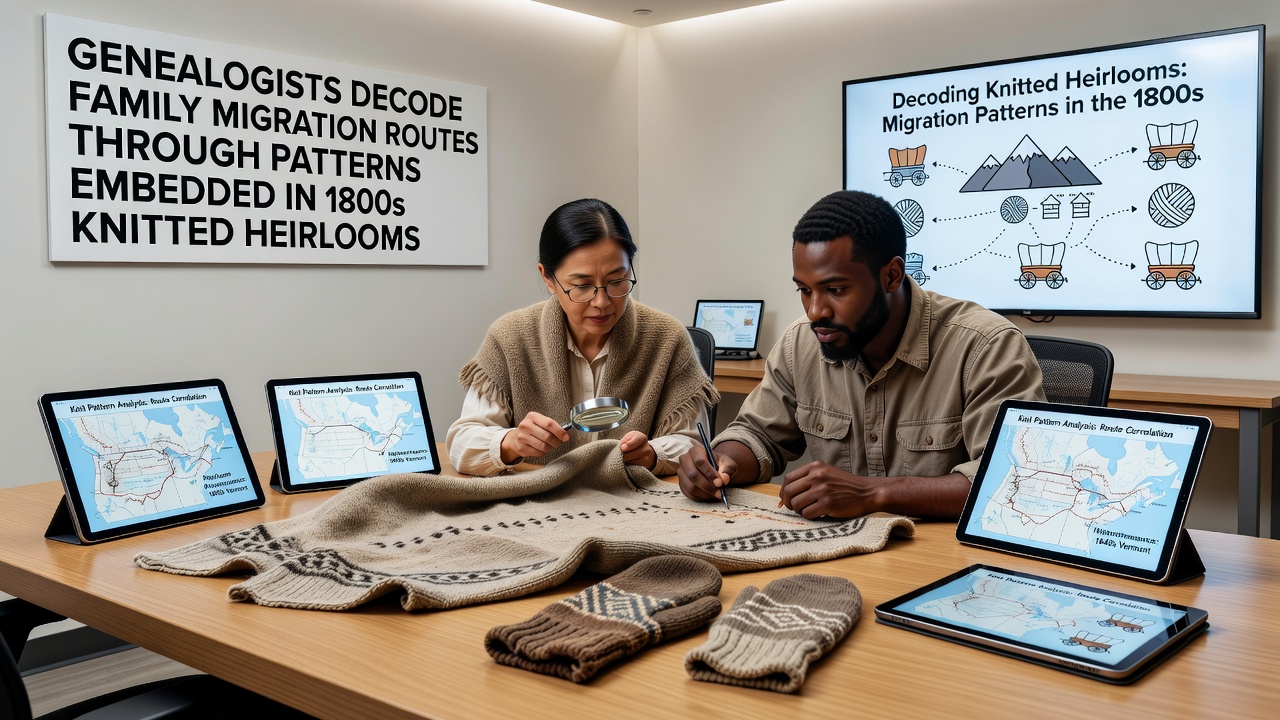
Training workshops scheduled alongside the release will teach participants how to photograph and measure stitch density and dye residues without damaging fragile fibers. The sessions emphasize standardized terminology so that entries from different collections remain comparable across platforms.
Technical Methods and Collaboration
Teams combine traditional textile analysis with digital imaging that captures stitch angles and yarn diameters at high resolution. Software then matches these measurements against reference libraries compiled from known origin pieces. When a match occurs, the system suggests possible routes that align with historical transportation networks of the period.
Partnerships between textile conservators and genealogical societies have produced shared protocols for provenance verification. These protocols require multiple lines of evidence, including fiber content tests and comparison with printed pattern books circulated in the 1800s. The requirement reduces the chance that later repairs or substitutions alter the original data encoded in the item.
Conclusion
Knitted heirlooms supply an additional dataset that complements written records and oral histories. As more collections receive systematic documentation, the combined information sharpens understanding of how families moved across North America during the nineteenth century. Continued cross-referencing with institutional archives ensures the patterns remain traceable and verifiable for future researchers.