Casey Krause · 1 November 2026
Historians Trace the Evolution of Norwegian Selbu Mittens Through Family Heirloom Collections Across Scandinavia
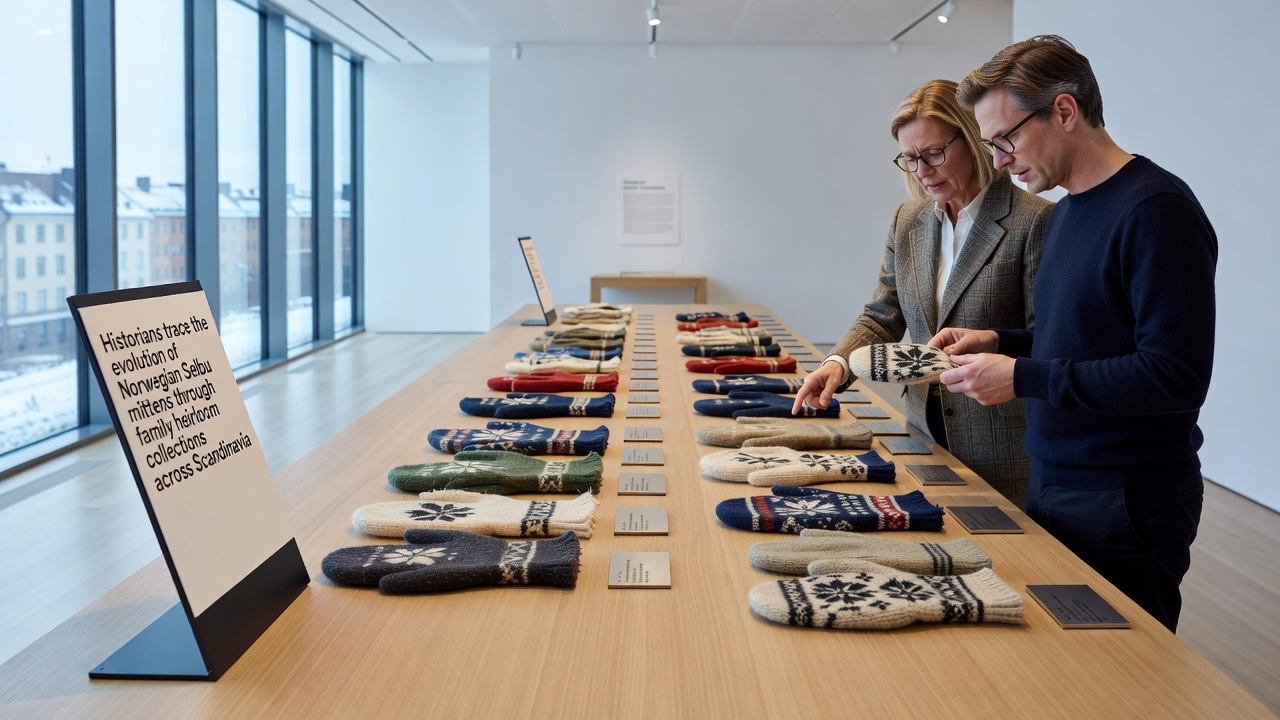
Historians have followed the development of Norwegian Selbu mittens by examining knitted pieces passed down through generations in private homes and regional archives throughout Norway, Sweden, and Denmark. These mittens emerged in the Selbu valley during the mid-1800s when local women began incorporating geometric motifs into practical winter handwear using wool from nearby farms. Early examples feature eight-pointed stars worked in two colors, a design that spread rapidly after a Selbu woman named Marit Guldseth sold a pair at a market in Trondheim in 1857.
Collections held by families in central Norway reveal gradual shifts in color palettes and motif complexity as knitters gained access to imported dyes and commercial yarn in the late nineteenth century. Researchers from the Norwegian Institute for Cultural Heritage Research note that single-color backgrounds gave way to multi-tone fields by the 1880s, while border patterns lengthened to accommodate more intricate repeats. Family inventories list mittens alongside household linens, indicating their status as both functional garments and valued gifts during weddings and confirmations.
Patterns and Regional Variations Documented in Heirloom Records
Scandinavian museum curators and independent scholars have cross-referenced heirloom tags, handwritten pattern notes, and census records to map how Selbu-style knitting traveled beyond its origin valley. In Sweden, mittens from Jämtland display elongated crosses and snowflake variants adapted to local sheep breeds that produced finer fleece. Danish collections from the island of Bornholm contain examples with added fringe at the cuffs, a detail that appears after 1905 when seasonal migration brought Norwegian workers to coastal fishing communities.
Evidence from estate documents shows that women often copied patterns from borrowed mittens rather than written instructions, leading to small mutations that later became distinct village signatures. One study published by the University of Oslo’s textile history program tracked thirty-seven such variations across three generations of a single family in Trøndelag, demonstrating how individual knitters introduced personal flourishes while preserving the core eight-pointed star.
Archival Work Accelerates in 2026
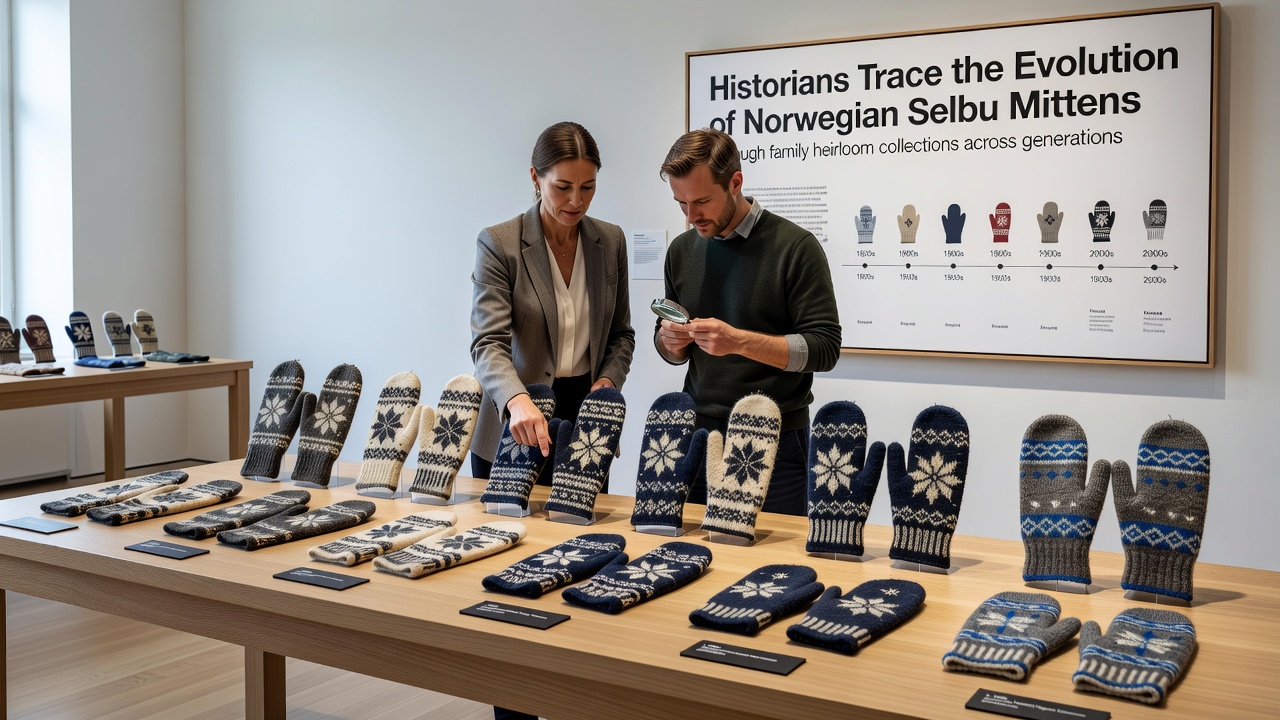
During November 2026, several Scandinavian institutions opened digitized databases of family-held textiles, allowing researchers to compare thousands of photographs and measurements without handling fragile originals. The project coordinated by the National Museum of Norway includes contributions from private owners in Sweden and Denmark who submitted images of mittens still stored in cedar chests or displayed on living-room walls. Data from these submissions indicate that the average number of color changes per mitten increased steadily from two in 1860 to five by 1920 before stabilizing again after synthetic dyes became widely available.
Historians have also examined shipping manifests and merchant ledgers to understand supply chains that influenced material choices. Wool from Iceland entered Selbu markets in the 1890s, and families recorded its use in thicker mittens intended for outdoor labor. Pattern books printed in Oslo during the 1920s standardized some designs for commercial sale, yet rural collections continue to hold one-of-a-kind pieces that never entered published charts.
Cross-Border Exchanges Revealed Through Private Correspondence
Letters preserved alongside mittens in family archives document exchanges between Norwegian immigrants in Minnesota and relatives who remained in Selbu. Knitters on both sides of the Atlantic traded pattern sketches, sometimes adapting motifs to match available yarn weights. American collections contain examples worked in thicker two-ply wool sourced from local sheep, while the Norwegian counterparts retain finer three-ply strands typical of home-spun production in the late nineteenth century.
Researchers note that these transatlantic exchanges introduced new border treatments, such as the addition of small dots or dashes between larger motifs, a detail that appears in Minnesota heirlooms dated 1912 but does not surface in Norwegian pieces until after 1925. Such findings illustrate how migration patterns and postal communication shaped textile traditions beyond national borders.
Conservation Efforts and Future Research Directions
Regional archives in Trondheim and Stockholm have begun conservation programs focused on stabilizing dyes and reinforcing worn cuffs in the most fragile heirloom pieces. Volunteers trained in textile repair work alongside professional conservators to create custom mounts that allow safe display without further stress on the knitted fabric. Funding for these initiatives comes partly from cultural heritage grants administered by the European Union and partly from private donations tied to family reunions held in Selbu each summer.
Future studies plan to incorporate chemical analysis of dye residues and DNA testing of wool fibers to confirm the geographic origins of materials used in undated mittens. Preliminary results from samples taken in 2025 already suggest that some early pieces incorporated wool from Swedish Gotland sheep, supporting oral histories of cross-border trade that had previously lacked physical evidence.
Conclusion
Family heirloom collections continue to supply primary material for understanding how Selbu mittens evolved from simple two-color work into complex, multi-hued garments while retaining their essential geometric vocabulary. Ongoing digitization projects and international collaboration among historians, conservators, and private owners ensure that these records remain accessible for comparative research across Scandinavia and beyond. The mittens themselves, still worn during winter festivals and passed to new generations, serve as tangible links between past knitting practices and present-day textile heritage.